forward head posture
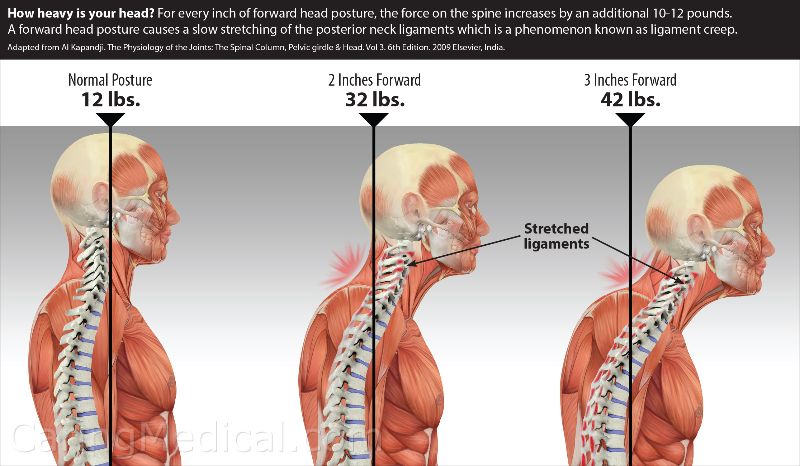
Forward head posture (FHP) is a common postural issue where the head juts forward, positioning the ears in front of the shoulders instead of directly over them. This misalignment, often called "text neck," significantly increases the weight that the neck and upper back muscles must support, leading to pain and other health issues.
Common causes
- Prolonged screen time: Constantly looking down at phones, tablets, or computer screens is a leading cause.
- Poor ergonomics: A desk or workstation that forces you to hunch over can contribute to FHP.
- Repetitive activities: Occupations that require leaning forward for long periods, such as sewing or driving, can also cause FHP.
- Muscle imbalance: Weak neck and upper back muscles and tight chest muscles can cause the shoulders to round forward and the head to follow.
- Heavy bags: Regularly carrying a heavy backpack or purse can pull the body out of alignment.
Common symptoms
- Pain and stiffness: Chronic pain and tension in the neck, shoulders, and upper back are hallmark symptoms of FHP.
- Headaches: Tension headaches and migraines can be triggered by muscle strain in the neck.
- Reduced mobility: A decreased range of motion in the neck can make it difficult to turn or tilt your head.
- Balance issues: FHP can affect balance, especially when using a computer for long periods.
- Breathing difficulties: The hunched posture can restrict the ribcage and affect your ability to breathe deeply.
- Jaw pain: Tension in the jaw joint (TMJ) can result from the strain placed on surrounding muscles.
How to correct it
Fortunately, you can often correct FHP with specific exercises, stretches, and ergonomic adjustments.
- Exercises:
- Chin tucks: This helps strengthen the deep neck flexors. While standing or sitting, gently tuck your chin in as if making a double chin, and pull your head straight back until you feel a stretch in the back of your neck. Hold for a few seconds and repeat.
-
- Shoulder blade squeezes: This strengthens the upper back muscles. Squeeze your shoulder blades together and hold for a few seconds. Repeat multiple times a day.
- Stretches:
- Pectoral stretch: Stand in a doorway with your forearms on the frame and elbows bent at 90 degrees. Lean forward until you feel a stretch in your chest.
-
- Upper trapezius stretch: Gently tilt your head to one side, using your hand for light pressure, to stretch the neck and shoulder muscles.
- Ergonomic adjustments:
- Raise your monitor: Position your screen so the top third is at eye level.
-
- Take breaks: Stand up and move around every 30 minutes to reset your posture.
-
- Use proper pillows: Sleep on a pillow that supports the natural curve of your neck.
When to see a doctor
You should consult a healthcare provider if your symptoms are persistent, severe, or interfere with your daily life. A professional can help diagnose underlying issues and recommend a physical therapy program tailored to your needs.
