Lordosis
Common Symptoms
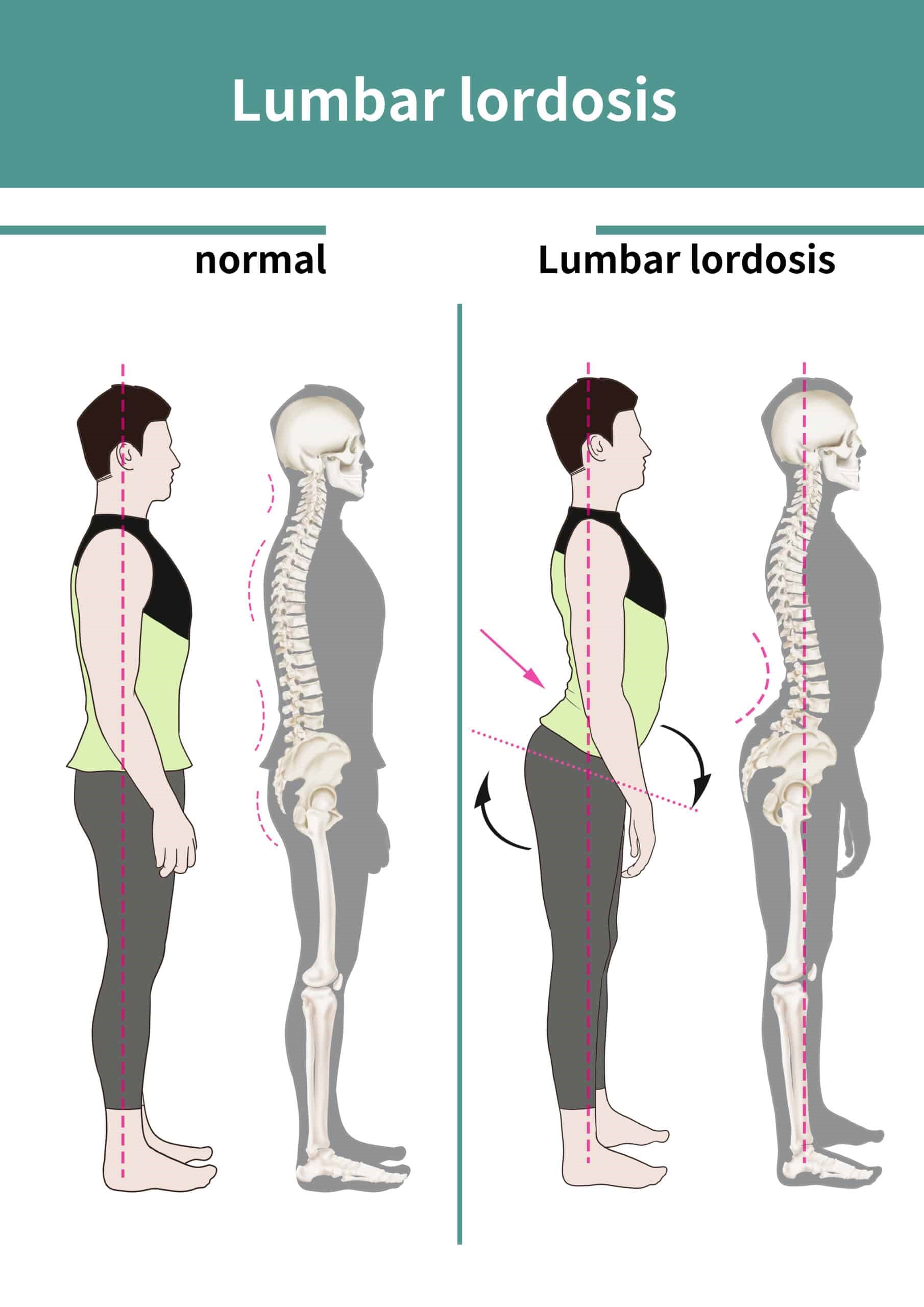
Mild lordosis often has no symptoms other than a change in appearance. However, excessive lordosis can cause:
- A "swayback" appearance with a prominent abdomen and buttocks.
- A visible gap between the lower back and the floor when lying on your back.
- Lower back pain and muscle spasms or stiffness.
- Reduced range of motion in the back or neck.
- Numbness, tingling, or weakness in the legs or arms (in severe cases due to nerve compression).
Causes and Types
Lordosis can affect people of all ages. Common causes and types include:
- Postural Lordosis: The most common type, typically caused by weak abdominal muscles, poor posture, and excess weight (especially around the belly).
- Compression Fractures: Broken vertebrae, often due to osteoporosis.
- Spondylolisthesis: A condition where one vertebra slips forward onto the bone below it.
- Obesity: Excess weight puts strain on the lower back and pulls it forward.
- Other Conditions: Diseases like muscular dystrophy, cerebral palsy, or congenital defects can affect muscle function and lead to lordosis.
Treatment Options
Treatment depends on the underlying cause and severity of the curve:
- Physical Therapy: Specific exercises to strengthen core and back muscles and improve flexibility.
- Medication: Over-the-counter or prescription pain relievers to manage pain and inflammation.
- Weight Management: Losing excess abdominal weight can significantly reduce strain on the lower back.
- Bracing: In children and adolescents, a brace may be used to help control the curve's progression during growth.
- Surgery: Reserved for severe cases that cause persistent pain, neurological symptoms, or functional impairment, often involving spinal fusion to stabilize the spine.
To reduce lordosis (hyperlordosis),
the focus should be on strengthening the core muscles (abs and back) and stretching tight hip flexors and hamstrings.
1. Pelvic Tilts
- How to Perform: Lie on your back with knees bent and feet flat on the floor. Tighten your lower abdominal muscles and gently press your lower back toward the floor. Hold for 5 seconds and then relax. Repeat 10 times.
2. Bridge Exercise
- How to Perform: Lie on your back with knees bent and feet flat on the floor. Slowly lift your hips off the ground until your body forms a straight line from your shoulders to your knees. Hold for 10 seconds, then slowly lower your hips back down. Repeat 10 times.
3. Plank
- How to Perform: Rest on your forearms and toes, keeping your body in a straight line from head to heels. Engage your core muscles and avoid arching your back. Hold for as long as possible (start with 20-30 seconds). Repeat 3 times.
4. Cat-Cow Stretch
- How to Perform: Start on your hands and knees. Inhale, arch your back downward (cow pose). Exhale, round your spine upward and bring your chin to your chest (cat pose). Slowly flow between the two positions 10 times.
