Hallux varus
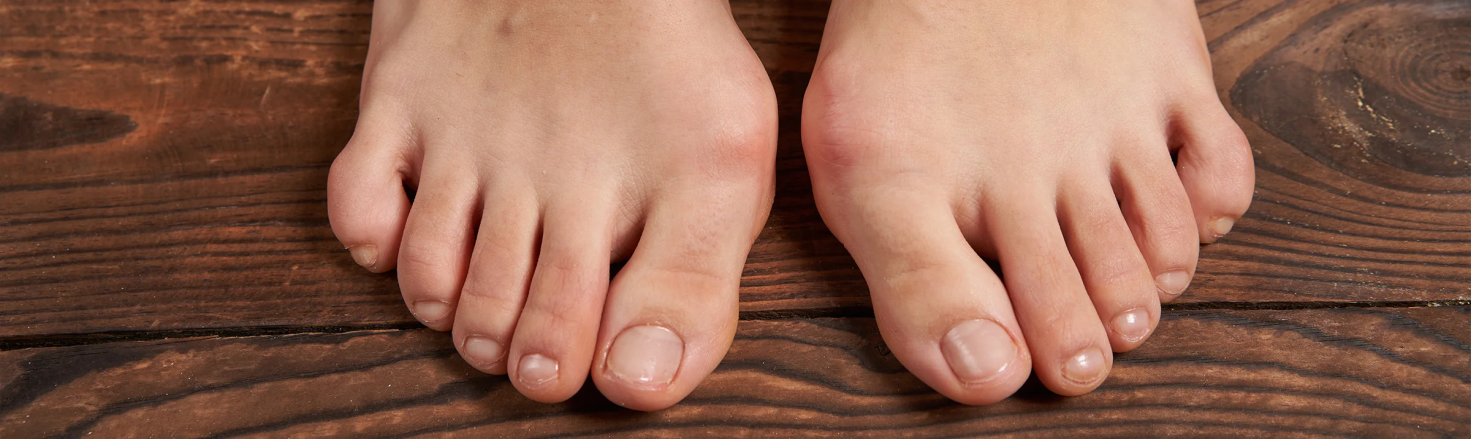
Hallux varus is a foot deformity in which the big toe, or hallux, turns inward toward the other foot, pointing away from the second toe. This is the opposite of a bunion (hallux valgus), where the big toe drifts toward the smaller toes. Hallux varus can be congenital (present at birth) or, more commonly, acquired
Causes
The deformity can result from an imbalance of the tendons and ligaments surrounding the big toe joint.
Acquired causes:
- Bunion surgery complication: The most common cause is an overcorrection during bunion surgery, which occurs in 2–14% of cases.
- Injury: Trauma to the big toe joint can lead to a rupture of ligaments, causing instability.
- Inflammatory arthritis: Conditions like rheumatoid arthritis can cause the joint capsule to become lax.
- Neuromuscular disorders: Diseases such as cerebral palsy and Charcot-Marie-Tooth disease can cause muscle and tendon imbalances.
Congenital causes:
- A genetic predisposition.
- An abnormally tight or short abductor hallucis tendon.
- Associated foot abnormalities like a delta phalanx or big toe polydactyly.
Symptoms
The most visible symptom is the medial (inward) deviation of the big toe, but other symptoms can include:
- Pain and chronic soreness, often from friction with shoes.
- Difficulty wearing closed-toed shoes.
- A widened space between the big toe and second toe.
- Ingrown toenails due to the abnormal pressure.
- Stiffness and a limited range of motion in the big toe joint.
Treatment
Treatment depends on the severity of the deformity and whether it is flexible or rigid.
Non-surgical treatments for mild, flexible cases can manage symptoms but do not correct the underlying deformity:
- Splints or taping to help stretch and support the soft tissues.
- Physical therapy and stretching exercises.
- Footwear changes to wider shoes with a roomy toe box.
- Custom orthotics to provide arch support.
- Anti-inflammatory medications and steroid injections to manage pain.
Surgical treatments are recommended for severe deformities or when conservative methods fail:
- Soft tissue procedures: These involve releasing or transferring tendons to rebalance the forces on the joint, especially for flexible deformities.
- Osteotomy: This involves cutting and realigning the bones in the foot.
- Joint fusion (arthrodesis): If the joint is stiff or arthritic, it can be fused to provide permanent correction.
