Genu varum (bow-leggedness)
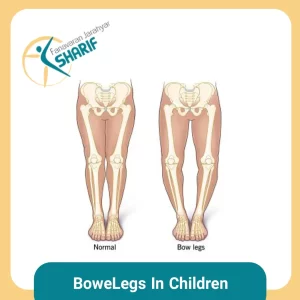
Genu varum, commonly known as bow-leggedness, is a condition where a person's legs curve outwards at the knees. While it is a normal part of growth for most infants and toddlers and usually resolves on its own, it can sometimes be a sign of a more serious underlying condition in older children and adults.
Physiologic genu varum (in infants)
Most babies are born bow-legged because of their folded position in the womb.
- Appearance: When the baby stands with their feet together, their ankles touch but their knees remain apart.
- Resolution: This is a normal part of development and the legs typically straighten out by the time the child is around 3 to 4 years old. It does not cause pain and usually does not affect their ability to crawl or walk.
Pathologic genu varum (in older children and adults)
When the bowing does not improve with age or is severe, it may be due to an underlying medical issue.
Symptoms:
- A noticeable outward curve of the legs.
- The knees do not touch when the ankles are together.
- A waddling or irregular gait.
- Pain in the knees or hips (more common in teens and adults).
- In-toeing (pigeon-toes) and clumsiness in younger children.
Causes:
- Rickets: A bone growth disorder caused by a lack of vitamin D, calcium, or phosphorus.
- Blount's disease: An abnormal growth of the growth plate in the upper shinbone (tibia). This can get worse over time.
- Bone dysplasia: Genetic disorders that affect bone growth, such as dwarfism.
- Injury or infection: Trauma to a growth plate can hinder normal bone development.
- Osteoarthritis: Arthritis can cause a varus deformity in older adults.
Diagnosis and treatment
A doctor will perform a physical exam and may order further tests to determine the cause and severity of the bowing.
Diagnosis:
- Physical Exam: The doctor will observe how the child walks and assess the symmetry of the bowing.
- X-rays: May be used for children over two or if the bowing is asymmetrical to check for underlying bone issues.
- Blood Tests: Can help check for nutritional deficiencies like rickets.
Treatment:
- Observation: For most young children, no treatment is needed, as the condition will resolve naturally.
- Bracing or Orthotics: For more severe cases in children or those with Blount's disease, corrective braces or orthotic shoe inserts may be recommended.
- Surgery: In older children and adults with persistent or severe genu varum, surgery may be necessary. This could involve an osteotomy, where the bone is cut and realigned, or guided growth surgery in children to correct the deformity gradually.
Do you want me to search for exercises that may help with bow-leggedness caused by tight hip muscles?
