Ankle valgus
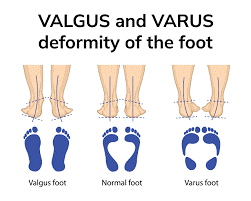
Ankle valgus is a deformity in which the ankle joint is misaligned, causing the foot to turn outward and the heel to roll outward. It often occurs alongside flatfoot (pes planus). While some people may not experience symptoms, the condition can progress and lead to pain and difficulty walking.
Signs and symptoms
- Outward-tilted foot: The foot angles away from the body, and the heel is turned outward.
- Pain: Discomfort may occur in the ankle, foot, or heel, especially with weight-bearing or long periods of standing.
- Swelling: Some people may experience swelling around the ankle, particularly on the inner side.
- Difficulty walking: Altered gait, excessive shoe wear, and instability can make walking difficult.
- Stiffness: The deformity can lead to stiffness in the foot and ankle.
Causes
Ankle valgus can develop for a number of reasons:
- Congenital: Some people are born with the condition.
- Neuromuscular disorders: Conditions affecting the nerves and muscles can contribute to the deformity.
- Skeletal issues: This includes problems like skeletal dysplasia and multiple hereditary exostoses (bone growths).
- Posterior tibial tendon dysfunction: Damage to this tendon, which supports the arch, can cause the arch to collapse and the heel to roll outward.
- Trauma: Past injuries to the ankle are a common cause, particularly in adults.
- Overweight: Being overweight can put increased stress on the feet, contributing to flatfoot and ankle valgus.
Treatment
The approach to treating ankle valgus depends on the severity, age of the patient, and the underlying cause.
Non-surgical options
- Orthotics: Shoe inserts can provide arch support and help improve foot alignment.
- Physical therapy: Exercises can help strengthen the foot ligaments and improve gait.
- Lifestyle changes: Maintaining a healthy weight and wearing supportive, low-heeled shoes can help reduce strain.
Surgical options
- Guided growth (children): For children who are still growing, a procedure called hemiepiphysiodesis can help correct the deformity by slowing the growth on the inner side of the ankle.
- Supramalleolar osteotomy (adults): After skeletal maturity, a surgeon may need to cut and realign the tibia bone to correct the deformity.
- Tendon procedures: For issues with the posterior tibial tendon, the surgeon may perform a tendon transfer.
When to see a doctor
Early detection can help prevent the condition from worsening. You should see a medical specialist if you experience persistent foot or ankle pain, progressive deformity, or difficulty walking.
Would you like me to find information about treatment options for children, adults, or both?
