Cubitus varus
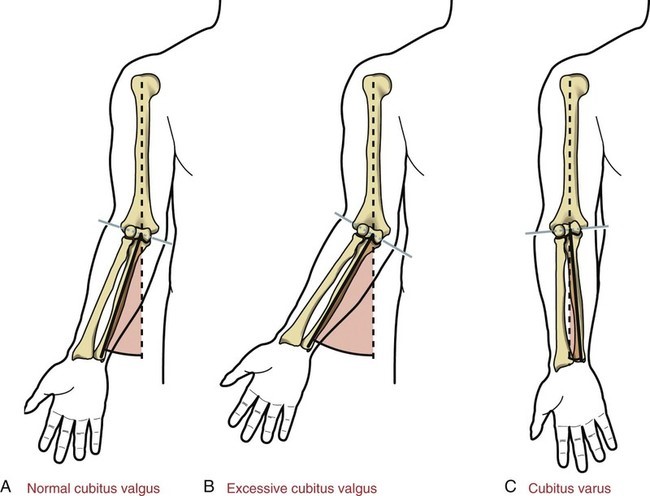
Cubitus varus, or "gunstock deformity," is a condition where the forearm deviates inward toward the body when the arm is extended. It is often a complication of a poorly healed fracture, such as a supracondylar fracture of the humerus, especially in children. While it is primarily a cosmetic concern, in severe or long-standing cases, it can cause pain, instability, and nerve damage.
Symptoms and diagnosis
- Visible deformity: The most prominent symptom is the cosmetic "gunstock" appearance of the elbow, which becomes noticeable when the arm is straightened. The carrying angle of the arm is reduced and deviates inward toward the body.
- Limited range of motion: Some individuals may experience reduced flexibility or difficulty fully extending the elbow.
- Pain and instability: In more severe, long-term cases, cubitus varus can lead to chronic pain and instability in the elbow joint.
- Diagnosis: A doctor can diagnose cubitus varus through a physical exam and with imaging studies like X-rays to assess the severity of the deformity. Full elbow extension is essential for diagnosis.
Causes
The most common cause of cubitus varus is a malunion, or improper healing, of a fracture in the humerus bone just above the elbow.
- Malunited supracondylar fracture: This is the most common cause, especially in children, and occurs when the bone does not heal in the correct alignment.
- Growth plate injury: Damage to the growth plate during childhood can cause abnormal bone growth, contributing to the deformity.
- Other fractures: Previous fractures near the outside of the elbow can also cause the condition.
- Congenital anomalies: In rare cases, the condition can be present from birth due to bone growth issues.
Treatment and management
Treatment depends on the severity of the deformity and whether it causes any functional limitations.
- Observation: In mild cases, doctors may simply observe the condition, especially if it doesn't cause pain or functional problems.
- Corrective osteotomy (surgery): For more severe deformities, surgery is the most effective treatment to realign the bone. This involves a surgical procedure called an osteotomy, where the surgeon cuts and repositions the bone.
- Postoperative rehabilitation: Following surgery, patients will typically wear a splint for several weeks and then begin exercises to regain their range of motion. Physical therapy is often part of the recovery process.
Long-term effects
While cubitus varus was historically seen as a cosmetic issue with little functional impairment, it is now recognized that it can lead to several long-term complications. These include:
- Chronic pain
- Early-onset osteoarthritis
- Ulnar neuropathy (nerve damage)
- Posterolateral rotatory instability (PLRI) of the elbow
- Increased risk of future elbow fractures
- Snapping triceps syndrome
