Kyphosis
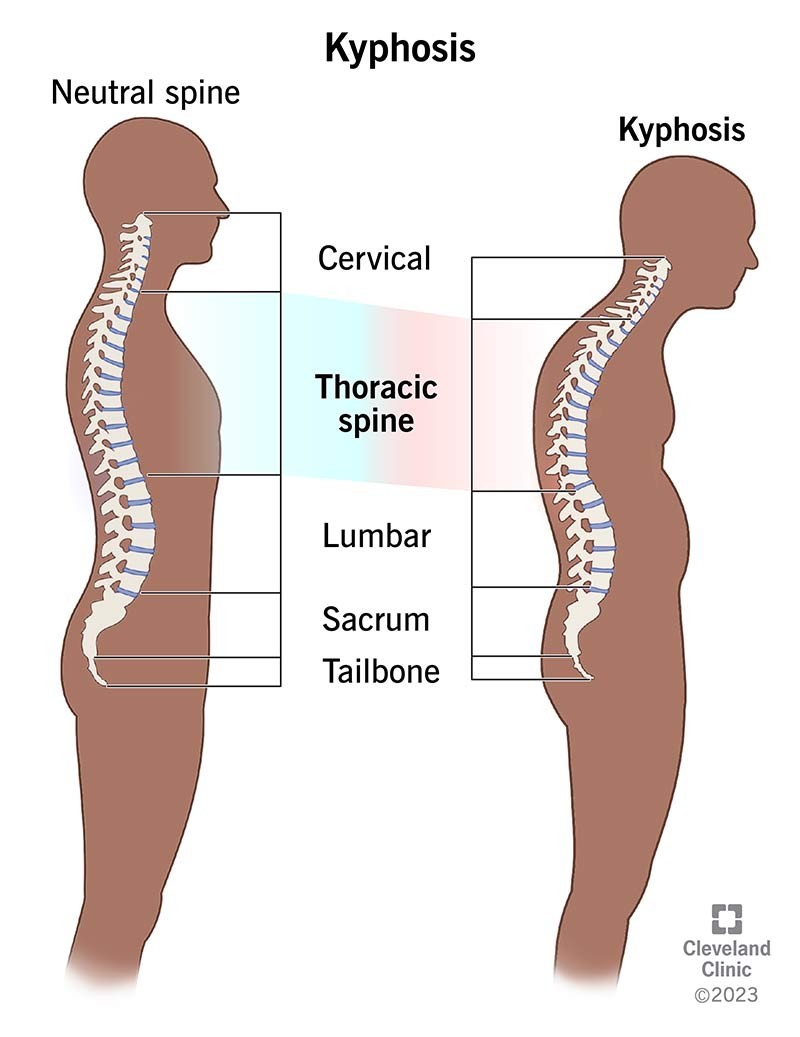
Kyphosis is an excessive forward curvature of the upper spine, causing the back to appear abnormally rounded or hunched. While everyone has a natural curve, a curvature greater than 45 degrees is considered excessive and requires attention.
Common Symptoms
Mild kyphosis might not cause any symptoms other than a change in appearance, but more severe cases may lead to:
- A visible rounded or hunched back appearance.
- Back pain and stiffness.
- Extreme tiredness or muscle fatigue.
- A forward-leaning head posture.
- Balance problems.
- In severe cases, difficulty breathing due to pressure on internal organs.
Causes and Types
Common causes include:
- Postural Kyphosis: The most common type, often resulting from prolonged poor sitting or standing posture.
- Scheuermann's Disease: A type usually noticed during adolescence, caused by the vertebrae developing into a wedge shape.
- Compression Fractures: Broken vertebrae, often due to osteoporosis, can cause spinal curvature, common in older adults.
- Birth Defects (Congenital Kyphosis): Some children are born with a spinal malformation that causes kyphosis.
Treatment Options
Treatment depends on the cause, severity of the curve, and the patient's age. Options may include:
- Physical Therapy and Exercises: To improve posture, strengthen back muscles, and relieve pain.
- Pain Relievers: Over-the-counter or prescription medications to manage pain.
- Bracing: A spine brace may be used in adolescents with Scheuermann's disease to stop the curve from progressing.
- Surgery: In severe cases that cause significant pain or functional impairment, spinal fusion surgery may be recommended to correct the alignment
Postural Kyphosis typically results from weakness in the upper back muscles and tightness in the chest. The following exercises help strengthen the muscles responsible for upright posture:
1. Superman Exercise
This strengthens the lower and upper back muscles.
- How to Perform: Lie on your stomach. Lift your arms, legs, and chest off the floor simultaneously using your back and glute muscles. Hold for 3-5 seconds, then lower slowly. Repeat 10 times.
2. Bridge Exercise
This strengthens the glutes and core to support the spine.
- How to Perform: Lie on your back with knees bent and feet flat. Slowly lift your hips off the floor until your body forms a straight line. Hold for 10-15 seconds, then lower slowly. Repeat 10 times.
3. Plank
This strengthens the entire core, promoting balance and spinal support.
- How to Perform: Rest on your forearms and toes. Keep your body in a straight line from head to heels. Engage your abs and hold for as long as possible.
4. Resistance Band Rows
This targets the muscles between the shoulder blades, counteracting rounded shoulders.
- How to Perform: Sit with legs extended, loop a resistance band around your feet, and hold the ends. Pull your elbows back towards your body, squeezing your shoulder blades together. Return slowly and repeat 10-15 times.
